Epstein Files Released By Department Of Justice

on Dec 19, 2025 • Updated Feb 03, 2026
This article was updated on Tuesday, Feb. 3, 2026.
Final Batch Of Epstein Files Released Over A Month After Deadline
Over one month after the Dec. 19, 2025, deadline for President Donald Trump and his Department of Justice to comply with a law seeking to make publicly available many documents concerning Epstein, the remainder of the files are being released today, Jan. 30.
For the latest batch of files, which exceeds 3.5 million pages, the Department of Justice said the following:
“These files were collected from five primary sources including the Florida and New York cases against Epstein, the New York case against Maxwell, the New York cases investigating Epstein’s death, the Florida case investigating a former butler of Epstein, Multiple FBI investigations, and the Office of Inspector General investigation into Epstein’s death.”
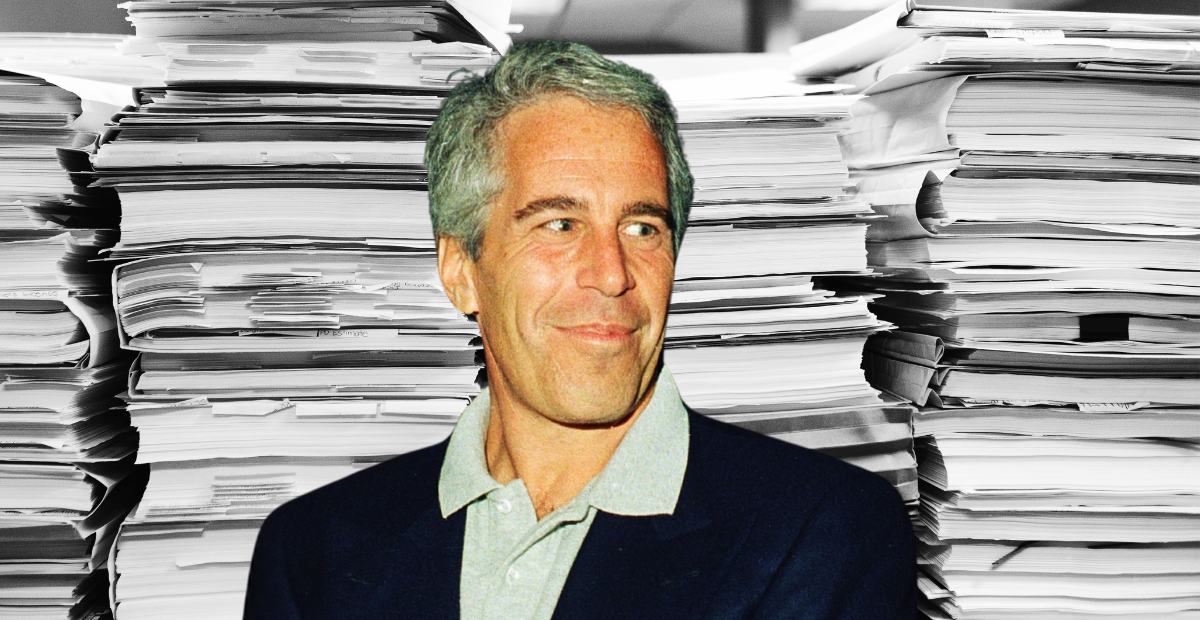
Since the death in federal prison of Jeffrey Epstein in 2019, the public has been interested in the truth regarding the well-connected convicted sex offender and his affiliates.
Rumors have circulated on both sides of the aisle regarding how, or why, Epstein died, and who may have had the most to gain from Epstein not being around to disclose information to authorities.
In the time since Epstein’s death, many individuals associated with him have fallen from grace, including Andrew Mountbatten-Windsor, formerly Prince Andrew, the Duke of York; and former Harvard University President Lawrence H. Summers.
Further, former President Bill Clinton was subpoenaed to testify before the House of Representatives’ Oversight Committee, but failed to show up for his October deposition. Both he and former Sec. of State Hillary Clinton were rescheduled to give their depositions on Dec. 17, 2025, and Dec. 18, 2025, respectively, but that never materialized.
Now, the Clintons are at risk of being held in contempt of Congress, with the House of Representatives set to vote on the matter as early as Feb. 4.
Ahead of this vote, the Clintons reportedly told the Oversight Committee on Feb. 2 that they would comply with the order to give depositions, but a date has yet to be set.
However, the big question still concerns Trump, who was once a friend of Epstein and was serving his first term as president when Epstein was arrested in 2019 and died…
Is the sitting president implicated in the files?
When Elon Musk made his exit from service as a Special Government Employee overseeing the Department of Government Efficiency, or DOGE, the tech billionaire famously claimed that Trump “is in the Epstein files,” adding, “That is the real reason they have not been made public.”
However, on Jan. 30, the Department of Justice stated:
“Some of the documents contain untrue and sensationalist claims against President Trump that were submitted to the FBI right before the 2020 election.”
Further, the DOJ notes, “To be clear, the claims are unfounded and false, and if they have a shred of credibility, they certainly would have been weaponized against President Trump already.
But what do the files released in the latest batch on Epstein contain?
About The Epstein Files Transparency Act
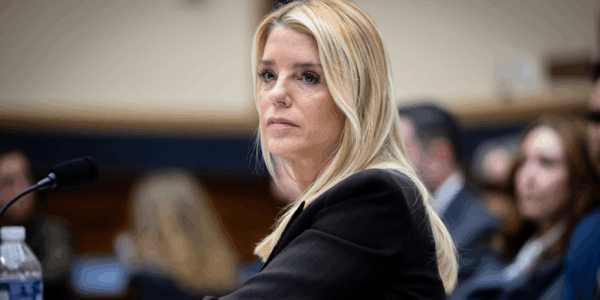
While the existence, or lack thereof, of a “client list” drew widespread attention in July when Attorney General Pam Bondi denied its existence after stating in February on Fox News that the list was “on her desk,” that attention translated to action in Congress.
Initially proposed by Rep. Ro Khanna, D-CA, one week after the fallout from Bondi’s denial of a client list existing, the Epstein Files Transparency Act didn’t gain much traction until it procured a Republican ally.
After the longest government shutdown in American history ended on day-43, on Nov. 12, 2025, members of the House of Representatives came together in support of a push for the bill to move forward which was instigated by Rep. Thomas Massie, R-KY.
The bill ensures that “all unclassified records, documents, communications, and investigative materials” in the Department of Justice’s possession which pertain to the investigation and prosecution of Epstein would be released.
Notably, this includes materials pertaining to Epstein’s closest associate, Ghislaine Maxwell, who is serving a 20-year federal prison sentence for sex trafficking.
Other documents included in this bill are flight logs, travel records, and “individuals named or referenced (including government officials) in connection with the investigation and prosecution of Jeffrey Epstein.”
Ultimately, the House voted 427-1 on Nov. 18, 2025, and it proceeded to the Senate, where it was approved unanimously the very next day.
On Nov. 19, 2025, Trump signed the Epstein Files Transparency Act into law, giving the Department of Justice a 30-day window to prepare the digital release of all applicable documents pertaining to Epstein.
Anything which is not included, such as victim identities, must be summarized to Congress in accordance with this law.
The rollout of the first batch of files, released on Dec. 19, 2025, was criticized for being incomplete, with numerous redactions and rumored missing documents.
Now, on Jan. 30, the Department of Justice has begun releasing a second significant batch of Epstein-related files.
RELATED: Dan Bongino Announces Resignation As No. 2 In The FBI
What We Know So Far, And Where To View The Files
Discussion of the Epstein files has largely faded over the past month, as the Trump administration’s actions in Venezuela, as well as immigration crackdowns in cities like Minneapolis, Minnesota, have dominated the news cycles.
As recently as Nov. 17, 2025, Trump said that he has “nothing to do with Epstein.”
His past friendship and association with Epstein has drawn significant criticism and scrutiny.
Still, for Trump, the release of these files is in keeping with a push for transparency on a variety of events which have led to, in some cases, decades of conspiracy theories.
Namely, the release of all files pertaining to the assassinations of President John F. Kennedy, Sen. Robert F. Kennedy, and Dr. Martin Luther King Jr. were significant, but yielded little to no new knowledge.
Similarly, all files regarding the famed aviator Amelia Earhart, who disappeared with her navigator Fred Noonan, were also released this year.
Of the Epstein files, Deputy U.S. Attorney General Todd Blanche told Fox News on Dec. 19, 2025, “I expect that we’re going to release several hundred thousand documents today, and those documents will come in all different forms — photographs and other materials associated with all of the investigations into, into Mr. Epstein.”
Continuing, he said, “I expect that we’re going to release more documents over the next couple of weeks … So today, several hundred thousand, and then, over the next couple of weeks, I expect several hundred thousand more.”
With the release of the first batch of files, the public was given access to documents which were organized as follows:
- Court Records;
- DOJ Disclosures, Including Disclosures Under the Epstein Files Transparency Act;
- Freedom of Information Act (FOIA); and
- House Committee on Oversight and Government Reform Disclosures.
While the release of the first batch of files had hundreds of thousands of pages of documents, NBC News reports that the first batch was “3,500 files, totaling more than 2.5 gigabytes of photos and documents.”
By comparison, the latest batch, released on Jan. 30, has approximately 3.5 million pages, including 2,000 videos and 180,000 images.
Notably, the DOJ said of the latest batch, “This production may include fake or falsely submitted images, documents or videos, as everything that was sent to the FBI by the public was included in the production that is responsive to the Act.”
The inclusion of potentially “untrue and sensationalist claims against President Trump” adds to the intrigue surrounding this release.
In a Jan. 30 letter to Congress, AG Bondi wrote:
“Today’s release marks the end of a comprehensive document identification and review process to ensure transparency to the American people and compliance with the Act. The Department has engaged in an unprecedented and extensive effort to do so. After submitting the formal report to Congress required under the Act and publishing the written justifications in the Federal Register, the Department’s obligations under the Act will be completed.”
To view the Justice Department’s batch of newly released files, visit its website, here.
Critical Responses To The Initial Release Of The Files
Shortly following the release of the batch of files made available on Dec. 19, 2025, there were many who noted a preponderance of redacted documents included within the files.
For the two key figures behind the Epstein Files Transparency Act — Rep. Ro Khanna, D-CA and Rep. Thomas Massie, R-KY — this posed an issue.
In a video statement, Khanna took the Department of Justice to task.
“They released one document from a New York grand jury of 119 pages, totally blacked out,” said Khanna, noting a judge required the release of the document. “The law requires them to explain redactions, there’s not a single explanation.”
View the redacted 119-page document, here.
He went on to point to Attorney Gen. Pam Bondi, saying, “The reality is Pam Bondi has obfuscated for months. She first said there were no more documents to be seen, now she’s admitting and releasing hundreds of thousands of documents, but it is an incomplete release with too many redactions.”
The DOJ’s document dump of hundreds of thousands of pages failed to comply with the law authored by @RepThomasMassie and me.
— Ro Khanna (@RoKhanna) December 19, 2025
One document, 119 pages of Grand Jury testimony, was completely redacted.
I explain what is missing and what the survivors and their lawyers are still… pic.twitter.com/Wg1xFIM2vE
Khanna went on to say that he and Massie are looking to hold officials responsible for the release of the files, with impeachment being an option on the table.
Massie’s remarks can be seen, here:
Unfortunately, today’s document release by @AGPamBondi and @DAGToddBlanche grossly fails to comply with both the spirit and the letter of the law that @realDonaldTrump signed just 30 days ago. @RepRoKhanna is correct. https://t.co/gZQyQBUT4R
— Thomas Massie (@RepThomasMassie) December 19, 2025
This is a developing story.