A SpaceX Rocket Crashed Into The Moon, With Questions Remaining About The Extent Of The Impact

on • Updated
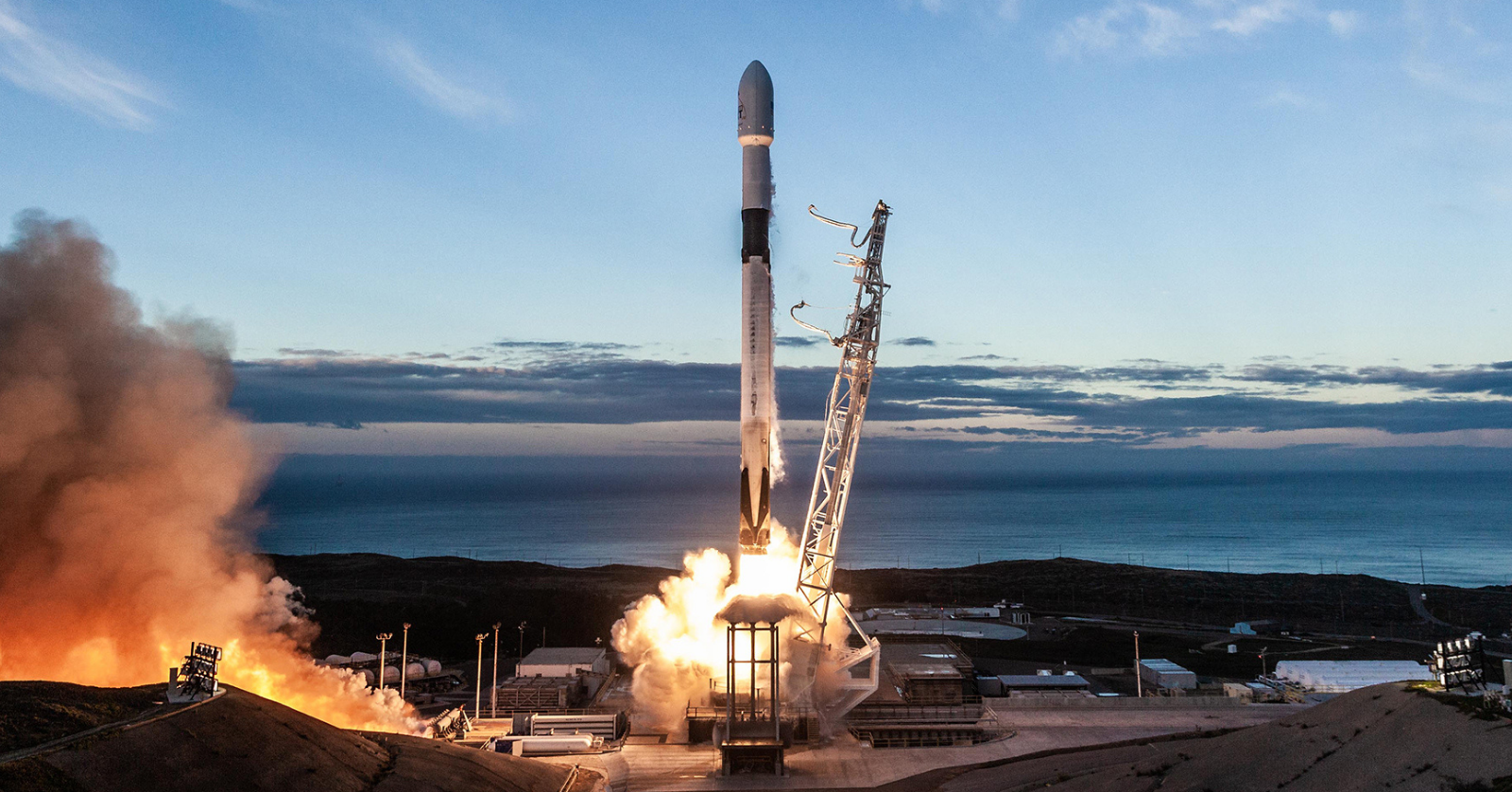
In the morning of Wednesday, Aug. 5, a SpaceX rocket collided with the moon.
The impact to the moon occurred at approximately 5,400 mph, with a fresh crater presumed — at the time — to have been left on the face of the lunar surface.
Now, as of Aug. 18, there’s photographic proof of the new crater.
About The SpaceX Rocket’s Collision With The Moon
The SpaceX rocket originated from a Jan. 15, 2025, launch at Cape Canaveral which sent Firefly Aerospace’s Blue Ghost and ispace’s Resilience to the moon.
While the Resilience lander crashed on the surface of the moon on June 5, 2025, the Blue Ghost successfully landed on March 1, according to The New York Times.
Launching these landers was the SpaceX Falcon 9, which NASA said was expected to crash on the moon after “solar activity and gravitational forces caused the stage’s unplanned return to the Moon.”
Ahead of the crash, NASA said:
“Because the Moon has no atmosphere to slow incoming objects, it is struck by meteoroids daily. Human‑made object impacts are far less common but do occur. The rocket stage is expected to create a crater about 60 feet wide and 12 feet deep and throw dust and rock outward as ejecta.”
Speaking with the Associated Press on Aug. 5, Carl Schmidt, who is a research assistant professor of astronomy at Boston University, stated that there are no images of the impact.
However, Schmidt said he is “100% certain” that his team with the European Southern Observatory’s Very Large Telescope observed the impact of the rocket on the moon.
Schmidt said that they “detected a stream of sodium and lithium stretching for miles (tens of kilometers) into space for at least five to 10 minutes following the impact,” as reported by the Associated Press.
NASA attempted to view the impact as it happened, but its space assets and ground telescopes did not yield immediate results.
The location of the crash is believed to be near the moon’s Einstein Crater.
The New York Times said that approximately eight hours after the impact, the Korean spacecraft Danuri flew past the crash site, but images are not expected to come from that flyover for several days, with days or even weeks being needed to determine the specific signs of the wreck.
Several videos alleging to show footage of the rocket impact on the moon are floating around online, but most have been discredited (see one of the reportedly fake videos, here).
On Tuesday, Aug. 18, NASA shared a before and after photo of the results of the crashed rocket on the moon.
See the before and after, here:
Spotted: Falcon 9 impact site
— NASA Solar System (@NASASolarSystem) August 18, 2026
NASA’s Lunar Reconnaissance Orbiter (LRO) has captured images of a new crater on the Moon. The crater formed on Aug. 5, 2026, when a SpaceX Falcon 9 upper stage impacted the lunar surface. https://t.co/aqduBYwpmg pic.twitter.com/hE83yvzmIk
This video, uploaded by Astrofísicos en Acción, has not been debunked yet, but shows a nearly imperceptible moment of brightness on the surface of the moon around the time of the crash.
See the alleged moment of impact, here:
¿Captamos el impacto? Los restos de un cohete Falcon 9 se estrellaron con la Luna este miércoles 5 de agosto. Circulan videos falsos hechos con IA, pero lo cierto es que nadie registró contundentemente el impacto en vivo.
— Astrofísicos en Acción (@AstrofisicosA) August 5, 2026
En nuestra transmisión observamos un pequeño destello. pic.twitter.com/0ZXIVIug6D
NASA wrote of the impact and others like it, saying:
“Although unplanned in this instance, disposing of upper stages on the lunar surface is a technically accepted and safe method and, in some cases, can be the only practical option for missions in low lunar orbit. Many operators choose controlled impacts because they provide predictable and trackable end of life outcomes.”
As missions to the moon become more common in the coming years, with 2028 expected to see astronauts return to the moon as part of NASA’s Artemis IV mission, impacts like this will become less and less acceptable.
In a statement given to the Associated Press, retired astrophysicist Jonathan McDowell said, “Things are going to get a lot busier near the moon. At that point an impact like this on the lunar surface plowing up huge amounts of dust going for hundreds of miles around is not going to be acceptable.”
Further, NASA wrote that it “is committed to debris mitigation and demonstrating responsible disposal practices that safeguard Earth, its orbital environment, and other planetary bodies.”
Prior to this crash, a Chinese rocket crashed into the moon in 2022.
Watch the 1902 Georges Méliès silent science fiction film, A Trip To The Moon, which depicts a rocket crashing into the moon, here:

This is a developing story.