50 Years Since John Wayne’s Final Screen Role, How Many Of His Greatest Films Have You Seen?

on
“Where is my John Wayne? Where is my prairie song? Where is my happy ending? Where have all the cowboys gone?”
– Paula Cole’s “Where Have All The Cowboys Gone?”
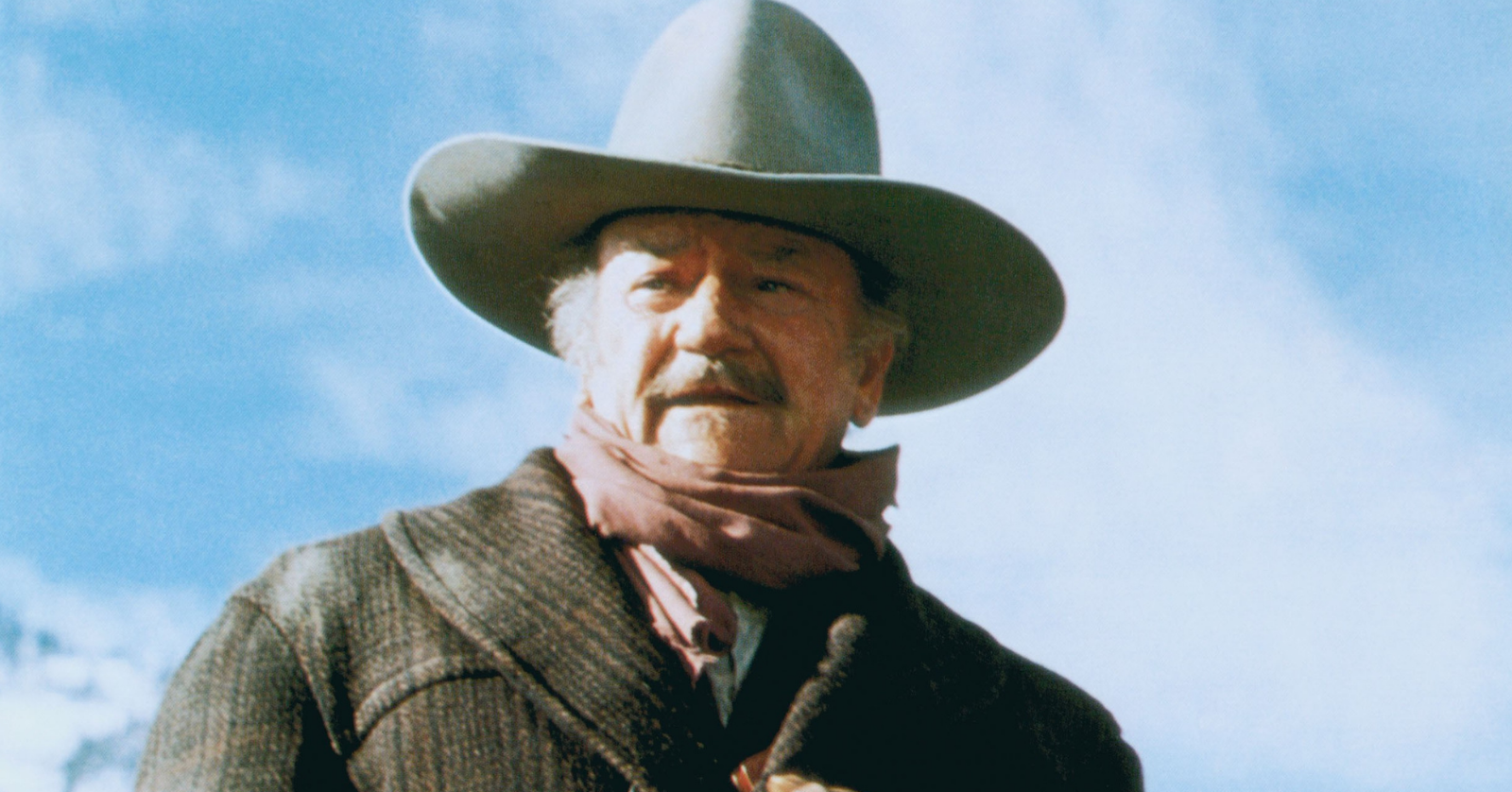
It was the summer of 1976 that cinemagoers saw the American film icon John Wayne on the silver screen for the final time.
The film, Don Siegel’s The Shootist (1976), is as much a Western about aging as it is a film about John Wayne’s legacy in cinema.
At the time, John Wayne was 69 years old, and he was enjoying a late career boost that was extended to him by his only Oscar win, which was earned six years earlier at the 1970 Academy Awards for his portrayal of U.S. Marshal Rooster Cogburn in True Grit (1969).
A film like The Shootist, even 50 years after its release, still shows the strength and magnetism of Wayne, with the film almost serving as a complement to the famous line from The Man Who Shot Liberty Valance (1962), which goes:
“When the legend becomes fact, print the legend.”
Now, five decades since his final screen appearance, take a look back at the legendary film career of the incomparable John Wayne.
RELATED: 10 Classic Westerns You Haven’t Seen… But Should
1. The Big Trail (1930)
John Wayne’s first major role is often thought of as the 1939 film Stagecoach, but his film career properly began in the silent era, with bit parts beginning as early as 1926.
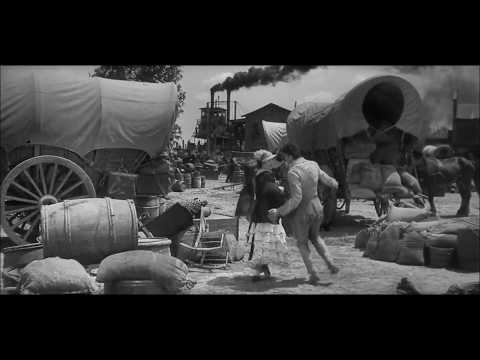
Then, in 1930, his first starring role comes along, in the form of Raoul Walsh’s The Big Trail (1930).
While the film is a “talkie,” it retains much of the style of the silent era, with Walsh directing this sprawling frontier drama as a pioneering effort in synchronized sound visual storytelling.
Interestingly, this is one of the first feature films to be shot in a large format, with Walsh shooting the film simultaneously in the then-standard 35mm as well as the experimental 70mm process developed by Fox Film Corporation, dubbed “Grandeur.”
In a time when films like Christopher Nolan’s The Odyssey (2026) have moviegoers clamoring for large format screenings, such as IMAX and 70mm, watching The Big Trail is like watching the birth of a particular kind of devotion to the theater-going experience.
Watch a clip of a 23-year-old John Wayne in his very-first starring role, as Breck Coleman in The Big Trail, here:
2. Stagecoach (1939)
Prior to the release of John Ford’s seminal Western film Stagecoach (1939), the Western was largely relegated to B-pictures.
Those B-pictures, which were produced inexpensively, were much of John Wayne’s bread and butter in the 1930s. Then, the film Stagecoach came along, propelling him to stardom overnight.
The film also marks the beginning of his most important filmmaking partnership, with John Ford directing Wayne in 14 films, spanning a significant swath of both of their careers.
See one of the greatest introductory shots in all of cinema — a shot that solidified John Wayne as a star, and in a truly great film — here:

3. Red River (1948)
Not even 10 full years after the release of Stagecoach, John Wayne began finding himself in a particular kind of role that he goes on to play several times in his career: that of the mentor.
In Howard Hawks’ Red River (1948), which is one of the earlier examples of this archetype within Wayne’s oeuvre, Wayne’s character is mentoring the character played by then-Hollywood newcomer, Montgomery Clift.
In the film, Wayne is given a wide range of emotion, with the film’s opening scene being one of the most heartbreaking in all of cinema.
When a band of Comanche warriors attack the wagon train that Wayne’s character’s love interest is on, he arrives too late, finding that everyone was killed except for a young boy.
Fourteen years later, that boy is now a young man, played by Montgomery Clift, and the two will find themselves at odds as they work together to move 10,000 heads of cattle over 1,000 miles to sell.
The film ends with a dramatic shootout.
The Criterion Collection has released Red River on Blu-Ray and DVD, with two cuts of the film offered: the Pre-Release Cut, and the Theatrical Cut.
Watch the trailer for Red River, here:

4. She Wore A Yellow Ribbon (1949)
Thinking about John Wayne’s final film, The Shootist (1976), a film like John Ford’s She Wore A Yellow Ribbon (1949) is particularly interesting.
Here, Wayne is 41 years old, but he’s playing a 60-year-old who is nearing retirement.
Donning makeup to give him the appearance of an older man, he also has a mustache, not unlike the one he naturally sports in The Shootist.
This is one of several examples of a sub-genre within Westerns that John Wayne periodically starred in: cavalry films.
She Wore A Yellow Ribbon is an exemplary cavalry film, as it’s made with heart and a keen attention to beauty (the film even won the Academy Award for Best Color Cinematography at the Oscars in 1950).
See a particularly touching scene, and one that shows off the film’s aesthetic beauty, here:

RELATED: Trump Given Escort By Rough Riders At Teddy Roosevelt Presidential Library
5. Sands Of Iwo Jima (1949)
More than just a Western star, John Wayne was also a star in many World War II films.
However, this is a complicated area in the study of John Wayne, as he was not a veteran despite the respect he held — and largely still holds — in the public’s perception of his patriotism.
Unlike Hollywood actors like James Stewart, Clark Gable, and Gene Autry, who all served in the military during World War II, John Wayne did not serve.
According to Military.com, John Wayne applied for a 3-A draft deferment, on account of his wife and four children.
During the war, his draft status was advanced to a 1-A, but the studio Republic Pictures lobbied to have his status shifted from 1-A to a 2-A, which would keep him out of the Armed Forces.
Republic Pictures argued, according to Military.com, that John Wayne being able to make films was in “support of national interest.”
Sands of Iwo Jima, while made four years after the war in 1949, was one such film produced by Republic Pictures.
Championing the U.S. Marines, the film would find Wayne earning an Oscar nomination for his role as a sergeant who has to prepare a company of freshly drafted Marines into battle-ready warriors.
Directed by Allan Dwan, who directed over 400 films in his five-decade career, many of the battle scenes include actual footage from World War II, including footage from the titular battle of Iwo Jima.
Sands of Iwo Jima has recently been restored by Kino Lorber, which released it anew on Blu-Ray in 2025.
Watch the trailer for Sands of Iwo Jima, here:

RELATED: 100-Year-Old WWII Veteran Shares His Story In Powerful New Country Song
6. The Searchers (1956)
No John Wayne list would be complete without The Searchers (1956), which is one of the finest films of the Golden Age of Hollywood.
As the title suggests, it tells the story of a search, with John Wayne playing one of his strongest and most memorable roles as a Confederate veteran named Ethan Edwards who is trying to track down his kidnapped niece.
It’s a story that spans several years, and deals with serious subjects, such as racism, PTSD, and the complicated nature of history.
Interestingly, the film’s plot has been repeatedly revisited by many filmmakers of the New Hollywood era of the 1970s, including Martin Scorsese, with Taxi Driver (1976); Michael Cimino, with the Best Picture winner The Deer Hunter (1978); and Paul Schrader, with Hardcore (1979).
Even George Lucas’ original Star Wars (1977) echoes parts of The Searchers, with the scene of Luke Skywalker finding his aunt and uncle’s homestead on Tatooine burned sharing much in common with a similar moment from the John Ford film.
Last year, the film received a much-needed restoration by Warner Archive, with a 4K presentation on Blu-Ray.
Watch the key inciting scene in The Searchers, in which Wayne’s character finds that his family’s home has been burned by Natives, here:

RELATED: 70 Years Later, The Small Screen Western ‘Gunsmoke’ Still Stands Tall
7. The Alamo (1960)
In addition to being an actor who was well aware of his mythic status, John Wayne also saw himself as a storyteller.
Stepping behind the camera on only two occasions, Wayne directed the very first Hollywood studio film about the Vietnam War, the 1968 film The Green Berets.
However, it was his directorial debut that best reflected his ambition as a filmmaker, as well as his own heritage within American cinema.
Directing The Alamo (1960), Wayne also cast himself as Davy Crockett, the frontiersman and former U.S. Representative for Tennessee who famously donned a coonskin cap.
The film earned John Wayne an Oscar nomination as producer, as the film was nominated for Best Picture at the 33rd Academy Awards in 1961.
The Alamo was nominated for a total of seven Oscars, ultimately only winning Best Sound.
Watch a portion of the film’s dramatization of the iconic Battle of the Alamo, here:

8. Donovan’s Reef (1963)
Not unlike John Ford’s The Quiet Man (1952), or even Howard Hawks’ safari picture Hatari! (1962), Ford’s 1963 film Donovan’s Reef finds John Wayne playing a relatively real person.
Rather than donning the trappings of a Western hero, or an active-duty soldier, Wayne plays the title character, Michael Donovan.
While he is a veteran of World War II in this film, the tone and pace of Donovan’s Reef allows for Wayne to have fun… and even fall in love.
Donovan’s Reef was newly restored and released on Blu-Ray by Kino Lorber last year.
Watch the trailer for Donovan’s Reef, here:

9. True Grit (1969)
From our contemporary vantage, perhaps it’s surprising that John Wayne won his sole Oscar so late in his career.
With Henry Hathaway’s True Grit (1969), Wayne was given an incredible character in a superb film.
Directed by a Hollywood studio maverick like Hathaway, the film is uniquely able to play into the old Hollywood style that made a star like Wayne, while also leaning into the sentiments of the then-burgeoning New Hollywood movement of the 1960s and ’70s.
Here, John Wayne has the pleasure of acting with the likes of country artist Glen Campbell and counter-culture fixture Dennis Hopper.
Famously, Dennis Hopper had worked with Hathaway before — on From Hell To Texas (1958) — but their relationship was tarnished by Hopper’s seeming inability to take direction due to his commitment to method acting.
It was Wayne who was responsible for bringing Hopper back into mainstream Hollywood, helping him get cast in Hathaway’s The Sons of Katie Elder (1965).
Watch John Wayne accept the Oscar for Best Actor in 1970, here:

RELATED: Robert Altman’s Country Music Film, ‘Nashville,’ Was Released 50 Years Ago
10. The Shootist (1976)
Lastly, we arrive at Don Siegel’s The Shootist (1976), which premiered 50 years ago this year.
This is the final film that John Wayne ever starred in, and it’s the perfect finale to a legendary career.
Opening with a montage of footage from earlier John Wayne films, the voiceover guides us to believe these moments are all from the life of a single character: a notorious gunman named J.B. Brooks.
This film, about aging and the inevitability of death, co-stars James Stewart, who previously starred alongside Wayne in The Man Who Shot Liberty Valance. Here, Stewart, who was 68 at the time, plays the town doctor who gives Wayne’s J.B. Brooks a cancer diagnosis with only a couple months left to live.
Over the course of the film, J.B. Brooks experiences the pangs of romance, as he lives in a boarding home run by a recently widowed woman, played by Lauren Bacall.
Bacall’s character’s son, played by Ron Howard, learns a few life lessons from Wayne’s J.B. Brooks, including the honor in being a shootist.
As the film nears its conclusion, a poetic phrase begins to loom over the film’s action.
Describing the wintery weather as experiencing a “false spring,” Wayne’s J.B. Brooks is at once expressing hope while also acknowledging the lie as he nears a final shootout.
“False spring” could’ve been the title for The Shootist, but the film’s title allows room for the chance that anyone who commits themselves to a life of violence may also die in such a manner.
The Shootist has been restored by Arrow Video, with a 2K remaster presented on Blu-Ray.
Watch the trailer for The Shootist, here:

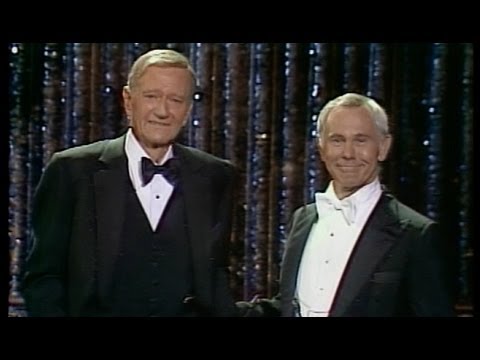
Watch John Wayne present the Academy Award for Best Picture to The Deer Hunter at the 1979 Oscars, just two months before his death, here:
RELATED: Ron Howard Opens Up About Working With John Wayne On His Final Film