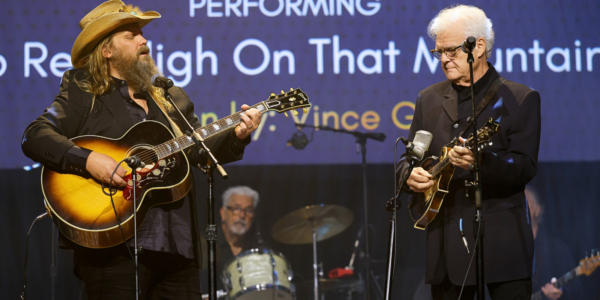
Vince Gill Speaks Out On The Streaming Era, Admitting He “Used To Make Money”

on
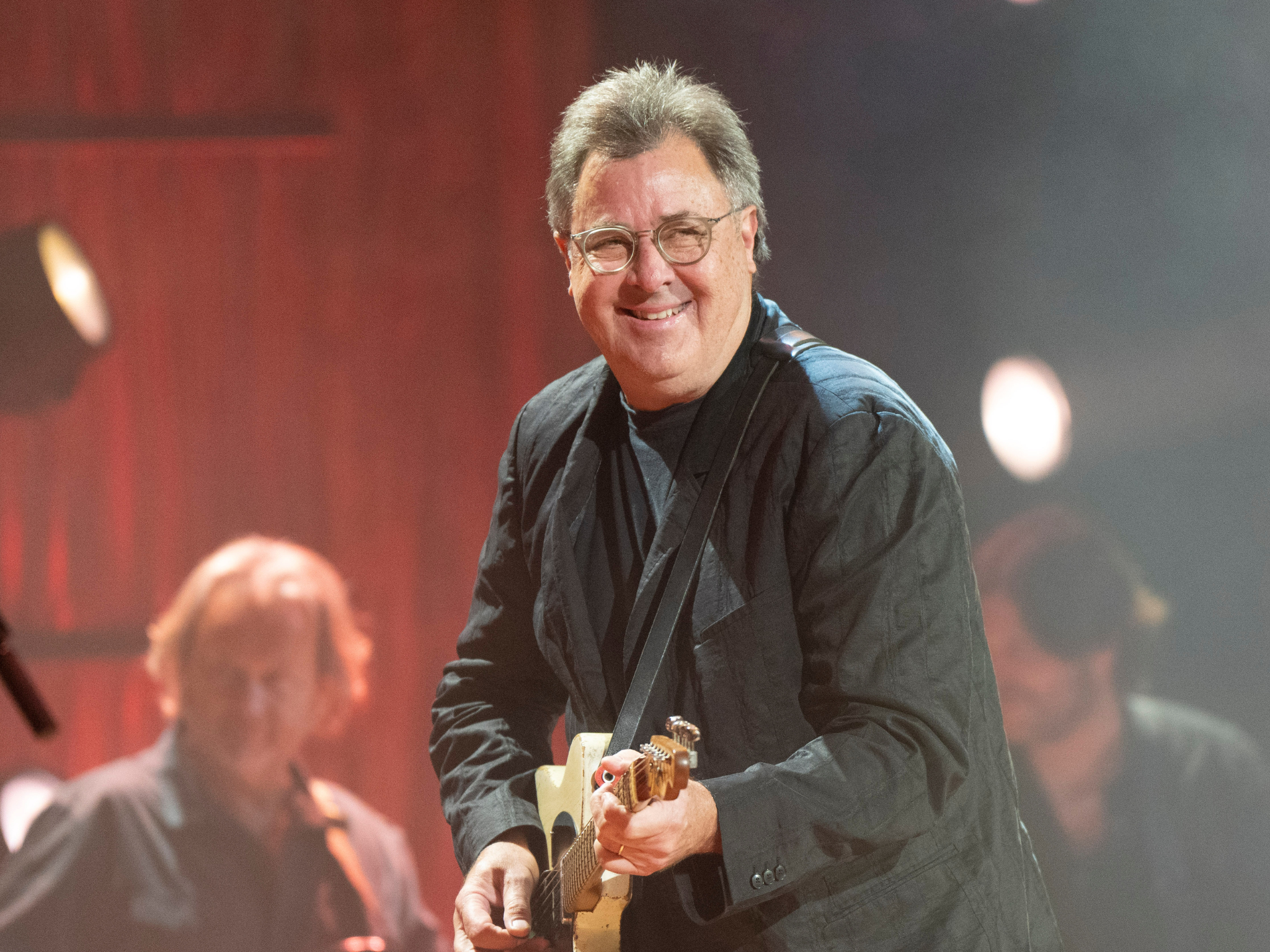
The digital streaming era has changed, in many ways, what it looks like to be a recording artist.
However, if you’re Vince Gill, not everything has to change…
“You’re talking to a guy that has not really delved into the modern world of anything,” Gill as he spoke on the Playlisted Podcast.
Then, he admitted, “Truth: I’ve never sent a text.”
This was just the beginning for Gill, as he began to open up about his feelings regarding streaming — feelings which happen to reflect his experience as a recording artist who has had to confront the changing landscape of music over his nearly five decades as a recording artist.
Gill stated, “It’s kind of hard getting paid for what it is that you create … Back in the day, you’d make a fortune, you know, with radio play, record sales — all those things were all part of it — and a lot of that has dried up.”
Vince Gill Speaks On Struggling To Make Money In The Digital Era
“I used to make money for writing songs, but also for selling records — you don’t sell records anymore,” Gill said on the Playlisted Podcast. “What you might make from selling records is gone.”
Countering that, Playlisted Podcast host Austin Burke said, “But the record labels are making more money than they’ve ever made.”
Stoically, Gill replied, “I don’t know that I believe that.”
Burke asked, “You don’t?”
Expounding on this, Gill said, “I don’t know that I do. I don’t know enough to be dangerous, but I can’t fathom how they could be, you know, if they’re not selling millions of records for 20 bucks a piece.”
Even as there is more access to music through streaming platforms, Gill says that hasn’t equated to more money for songwriters and artists.
How artists are paid through streaming platforms is a bit mysterious.
A recent report indicated that, for example, Ella Langley‘s record-setting hit “Choosin’ Texas” had made nearly $14 million — and that was before it had achieved its 25th non-consecutive week at No. 1 on the Billboard Hot 100 — but what her deal looks like with her record label is not publicly disclosed information.
According to Spotify’s webpage devoted to royalties, the streaming platform distributes “net revenue from Premium subscription fees and ads to rightsholders,” adding:
“In many cases, royalty payments happen once a month, but exactly when and how much artists and songwriters get paid depends on their agreements with their record label or distributor – or collection societies and publishers in the case of songwriters. Once we pay rightsholders according to their streamshare, they pay artists and songwriters according to their individual agreements.”
Spotify boasts having 788 million users, including 306 million subscribers.
For Gill, this hasn’t translated to the tangible success he experienced in the past.
“In all the times I’ve been streamed on YouTube or any of those formats, I’ve never received anything, you know?” he said. “So it’s kind of hard getting paid for what it is that you create.”
Within the past two or three years, Gill has had something he had never had prior: a publishing deal.
His resistance to having a publishing deal, he said, was on account of his personal philosophy of, “I write my own songs. Doesn’t make sense to have a publishing deal — give up half the money. If I have good songs, maybe they’ll work, maybe they won’t.”
In the time he’s had this deal with a publisher, he says he’s co-written about 150 songs, describing it as “the best blessing ever.”
Still, from his conversation on the Playlisted Podcast, it’s clear where Gill’s passion remains.
Speaking on co-writing music, as opposed to writing songs on one’s own, Gill recalled a quippy remark by singer-songwriter Roger Miller, who recorded the country hit “King of the Road” in 1965. Miller was asked about co-writing, and Gill said Miller replied, “‘Did Picasso co-paint?'”
From there, Gill said, “Co-writing is a great thing, but it doesn’t have to be everything, you know? ‘Go Rest High,’ I wrote by myself. A lot of my songs I’ve written by myself.”
He admitted that the “camaraderie that happens with a co-write is fun,” but ultimately said, “There would be times I’d co-write with people and they would be more centered around lyrics, and I would be more centered around melody and chords and music, and vice versa, sometimes I’d be the lyric-champion and they would be great players.”
Watch Vince Gill speak on being a recording artist in the digital era (with his anecdote about Roger Miller co-writing being at minute mark 1:52:12), here: