Lawsuit Filed Against AI Platform Suno For Allegedly Exploiting Elvis Presley’s Identity

on
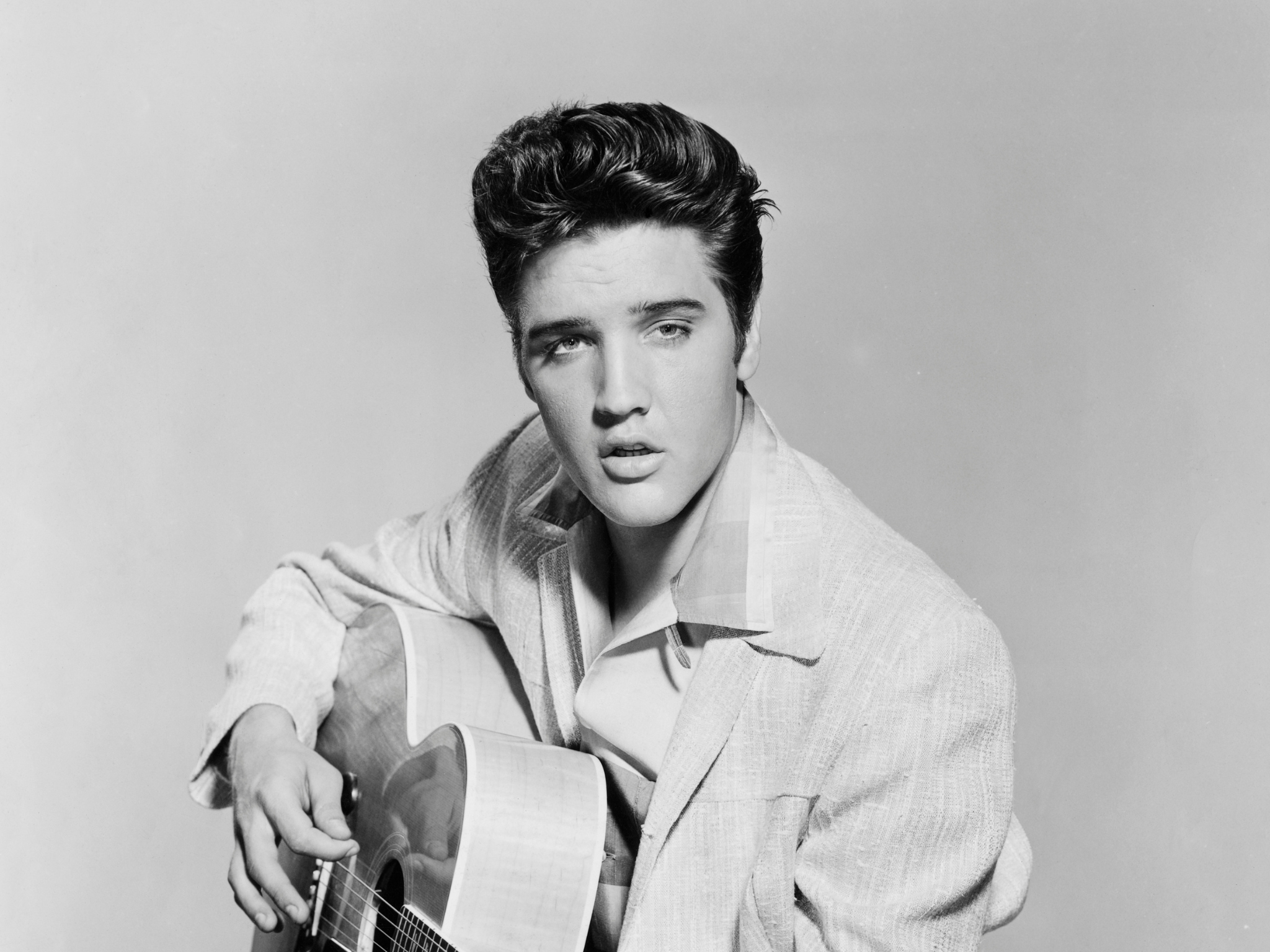
“A little less conversation, a little more action, please.”
– Elvis Presley’s 1968 song “A Little Less Conversation”
With the rise of artificial intelligence (A.I.), many are concerned about the technology and how it is being used — if at all — in the arts.
This technology was almost unthinkable in Elvis Presley‘s day, with the artist dying at the age of 42 in 1977 — a time in which A.I. was relegated to science fiction, like 2001: A Space Odyssey (1968).
However, decades later, the rightsholders of Elvis’ music are banding together to tackle what they allege is a case of copyright infringement, arguing that Presley’s identity is actively being exploited through A.I.
At the center of the lawsuit is an A.I.-generated music creation platform that has been controversial since its inception.
RELATED: Randy Travis Responds To False A.I. Claims Regarding His New Album
What The Lawsuit Against Suno Alleges
A.I. — or S.I., meaning “Super Intelligence,” as President Donald Trump refers to it — is a hot button issue.
Data centers continue to be a source of contention in communities across the country, the economy took a hit in light of potential Democrat-led regulation following the 2026 midterm, and even Pope Leo XIV released a papal encyclical on the value of humanity amid A.I.
Amid all this, the arts are beginning to contend with A.I., and some situations are even seeing litigation.
In a new lawsuit filed against Suno, which is an A.I.-generated music creation platform that touts itself as “A.I. for music creators,” several groups that are rightsholders of Elvis Presley’s music allege that his identity is being exploited.
Filed on Nov. 6 in the U.S. District Court Northern District of California, the lawsuit alleges that Suno has committed copyright infringement, with the rightsholders invoking the state of Tennessee’s ELVIS Act as it alleges that users of Suno can cite Elvis’ name to create their own music in the late country icon’s style.
The “ELVIS” of the ELVIS Act is an acronym, standing for Ensuring Likeness Voice and Image Security Act. The 2024 law aims to do as its acronym states, with protecting artists “from the misuse of artificial intelligence” being its purpose — a valued piece of legislation in the state that is home to “Music City.”
Quoting country artist Carrie Underwood, the lawsuit says she said of Elvis, “Before I knew anything about him, I knew his voice.”
The lawsuit claims that there are 859 songs are being exploited by Suno, including the work of Elvis, with the lawsuit seeking $128,850,000 in damages.
The lawsuit then alleges:
“Suno’s users do not even have to write lyrics nor melodies. No, armed with the unauthorized NIL of the world’s artists and illicit copies of millions of copyrighted works—including [Elvis’ music] — Suno’s A.I. model can create an entire song, including the instrumentals, (infringing) vocals, and entirely generated lyrics, all thanks to the training on the [image and likeness of Elvis] and these unlicensed copies of [Elvis’ music] in its library.”
Attorneys representing the rightsholders of Elvis Presley’s music — as well as the work of Eminem — have alleged that Suno has “mechanically encoded itself with artists’ identities, hard-work, creativity, and time, and harnessed them all for a consistent conveyor belt of cold hard cash.”
Expounding on his this works, the lawsuit states that a Suno Pro account “feature allows a user to take sections of vocals and save them” allowing users to “then save parts that sound like an artist they are attempting to simulate and Suno will create and publish endless new commercial outputs with that voice.”
Continuing, the attorneys argued that “the next Elvis won’t pick up a guitar,” powerfully adding in the lawsuit:
“Suno’s ravenous race to the bottom aims to make human creativity obsolete, coldly replicating without a license in seconds what takes years to learn, struggle with, maintain, and endlessly attempt to make better and perfect, begging the question from future generations who would attempt to start what is already an arduous, uncertain, and not always lucrative creative pursuit: ‘What’s the point?’”
A spokesperson for Suno responded to the lawsuit, telling Variety that the platform “exists to help people create new, original music, not to trade on anyone’s name or likeness,” adding that it prohibits “any unauthorized use of an artist’s work.”
Suno’s spokesperson went on to speak on the mechanics its platform allegedly has in place to counter attempts at replicating particular artists, saying, “To protect against this, we do not allow prompts for specific artists’ names and songs and work with third party providers to screen uploaded audio files and lyrics for potential misuse. We are always working to strengthen our guardrails and we will continue to add new safeguards that protect artists and our users.”
Aside from the $128,850,000 sought in damages, the Elvis rightsholders also seek a permanent injunction against Suno that would prevent it “from further infringing” Elvis’ work, among other actions that include the destruction of all unauthorized copies of Elvis’ music in Suno’s possession.
This lawsuit comes shortly after these Elvis rightsholders filed a lawsuit against Anthropic and Meta, alleging that training was given to its A.I. bot, called Claude, with Variety noting at least 274 Elvis songs allegedly utilized to achieve potential reproducibility.
Read the full 51-page lawsuit filed by the Elvis Presley rightsholders against Suno, here.
This is a developing story.
RELATED: Forrest Frank Speaks Out Against Chart-Topping A.I. Christian “Artist”
More About the ELVIS Act
In 2024, the state of Tennessee approved the ELVIS Act, which is an apt acronym standing for Ensuring Likeness Voice and Image Security Act.
The law expands upon the state’s existing Protection of Personal Rights, with TN Gov. Bill Lee signing the ELVIS Act for its “protections for songwriters, performers, and music industry professionals’ voice from the misuse of artificial intelligence.”
According to the state, “Tennessee’s music industry supports more than 61,617 jobs across the state, contributes $5.8 billion to our GDP, and fills over 4,500 music venues.”
Recently, the ELVIS Act has also been invoked by the estate of Johnny Cash, which filed a lawsuit against Coca-Cola in the fall of 2025 for allegedly using a song in a commercial that it feels sounded too similar to Cash.
This is a complicated lawsuit, as the estate of Cash acknowledges that A.I. was not used in the ad, citing Shawn Barker as the singer of the song in the commercial. Further, the song in the commercial is an original song penned for the Coca-Cola advertisement.
Similarly, a class-action lawsuit filed against Suno by singer-songwriter Jason Isbell alleges that Suno is holding “voiceprints” of specific artists, Variety reported.
With this, Isbell’s lawsuit alleges that back channel means within Suno have allowed for specific artists’ voices to be reproduced.
To this, Suno denied the allegation, but Variety notes that Suno said the First Amendment would protect citing a specific artist’s name to call to mind a genre.
RELATED: Vince Gill Opens Up About The Streaming Era, Admitting He “Used To Make Money”