Heat Wave Threatens July 4 Weekend Across Dozens Of States

on • Updated

“Now, we’re the hottest country anywhere in the world,” said President Donald Trump at his “America Is Back” kick off rally for the Great American State Fair last week.
Of course, Trump was speaking about the economy when he said that, but he could’ve been talking about the temperature…
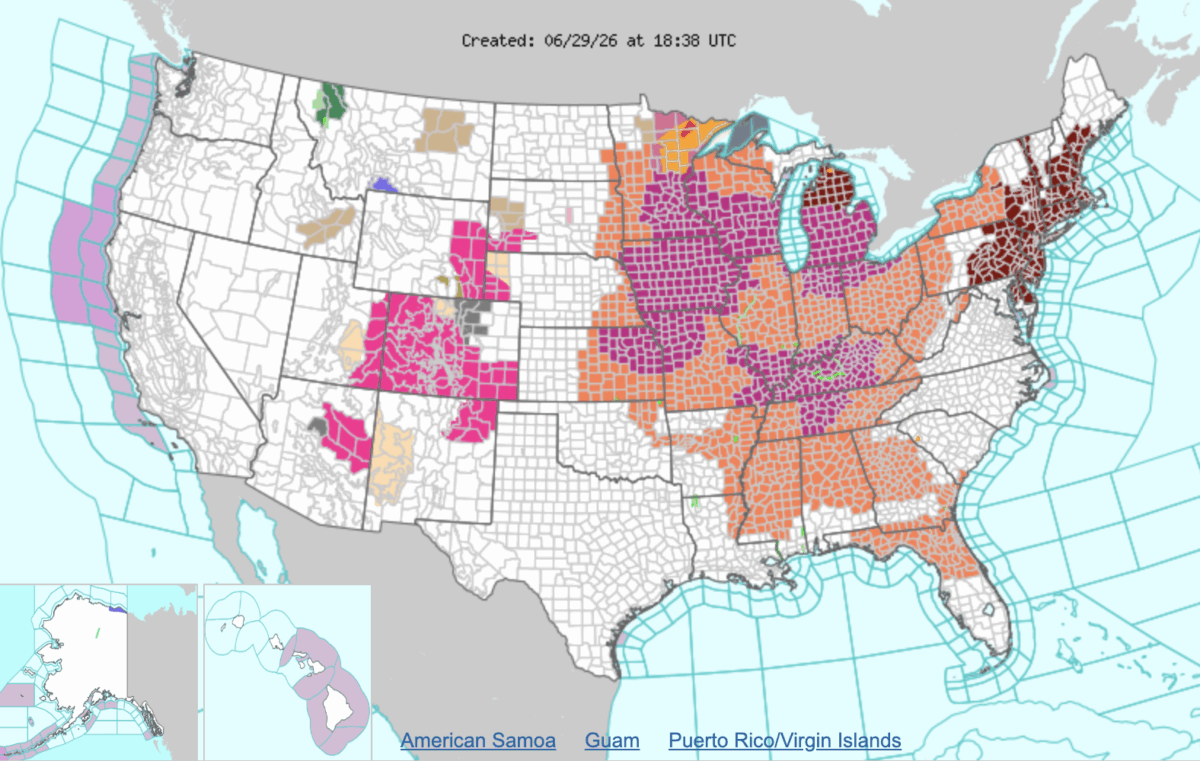
In the week leading up to the July 4 celebration of 250 years of American freedom, many states will be under an oppressive heat wave.
“Dangerous, record-breaking heat will intensify across most of the central and eastern U.S. this week,” the National Weather Service stated, adding that temperatures “will likely exceed 100 degrees,” with heat to be sustained through the Independence Day weekend.
RELATED: 10 Classic Westerns You Haven’t Seen… But Should
Weather “Hot As A Firecracker”
In the iconic 1975 film Nashville, which dramatizes the country music scene against the backdrop of America’s bicentennial, Ronee Blakley’s character declares, “It’s hot as a firecracker!”
Now, 51 years later, as America prepares to celebrate the semiquincentennial on July 4, commemorating 250 years of American independence, it’s hot again … and only getting hotter.
According to CBS News, “More than 100 record-high temperatures are expected through [July 4], including in major cities like New York City and Washington, D.C., which are expected to see record highs into the 100s.”
Altogether, AccuWeather reports that more than 24 states could be affected by the heat dome.
AccuWeather adds that a wave of humidity is to move through the eastern part of the states, exacerbating the heat wave.
“Even where actual temperatures remain in the lower 90s, AccuWeather RealFeel Temperatures are forecast to exceed 100 degrees and could top 110 during the hottest part of the day,” AccuWeather states.
Further, more than 250 record-warm overnight lows are expected during this heat wave as well.
This heat advisory begins on June 29 and goes through the July 4 holiday. Jet stream winds are expected to move the heat dome toward the plains, with the chance of thunderstorms later in the week to assist with cooling things down.
Speaking with NPR, NWS forecaster Bryan Putnam said, “Your temperatures might stay in the 80s and the 90s in the heat in the evening, as well as the fact is with the humidity, that’s going to keep those heat indices high as well. Just because the sun goes down doesn’t mean it still isn’t going to be hot.”
With this heat, risk of fire — even without the inclusion of fireworks — is heightened.
The Centers for Disease Control notes that there are many illnesses related to over-exposure to heat that families should be aware of, listing “heat stroke, heat exhaustion, rhabdomyolysis, heat syncope, heat cramps, and heat rash.”
The CDC advises the following steps to stay safe in high-temperature outdoor situations:
- Stay in the shade as much as possible;
- Take breaks when you can;
- Do outdoor activities during the coolest parts of the day or evening, if possible;
- Stay hydrated (limiting beverages high in sugars and sodium, caffeine, and alcohol); and
- Check your urine color (when it’s light yellow or clear, it usually means you are drinking enough water).
Meanwhile, in Idaho, Montana, and Wyoming, residents are under a winter weather alert as they face a rare summer snow storm.
RELATED: U.S. Residents Hit With Over A Foot Of Snow Days Before 4th Of July