“Greatest iPhone Video Ever Recorded” Shared By Astronaut Reid Wiseman

on
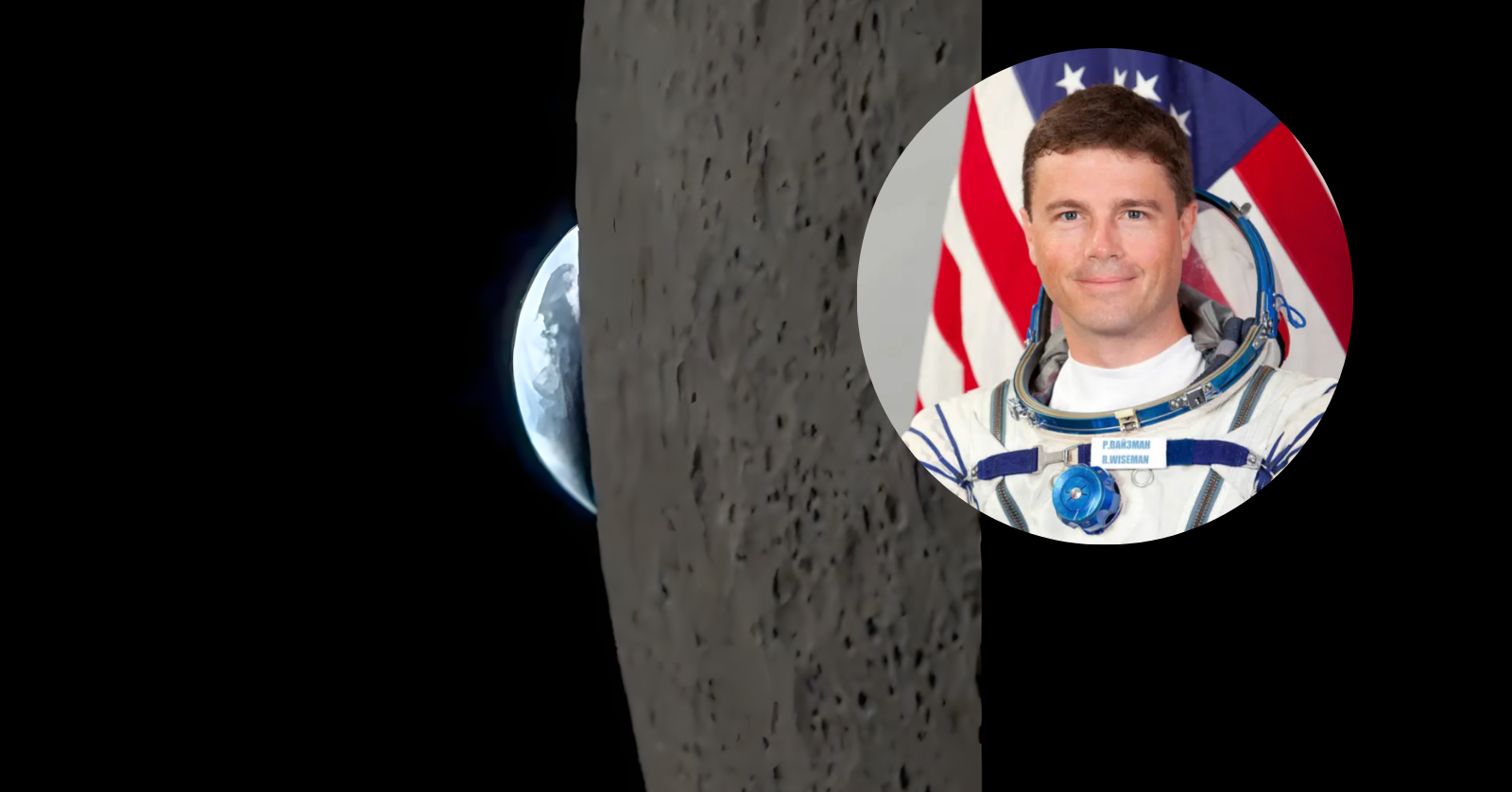
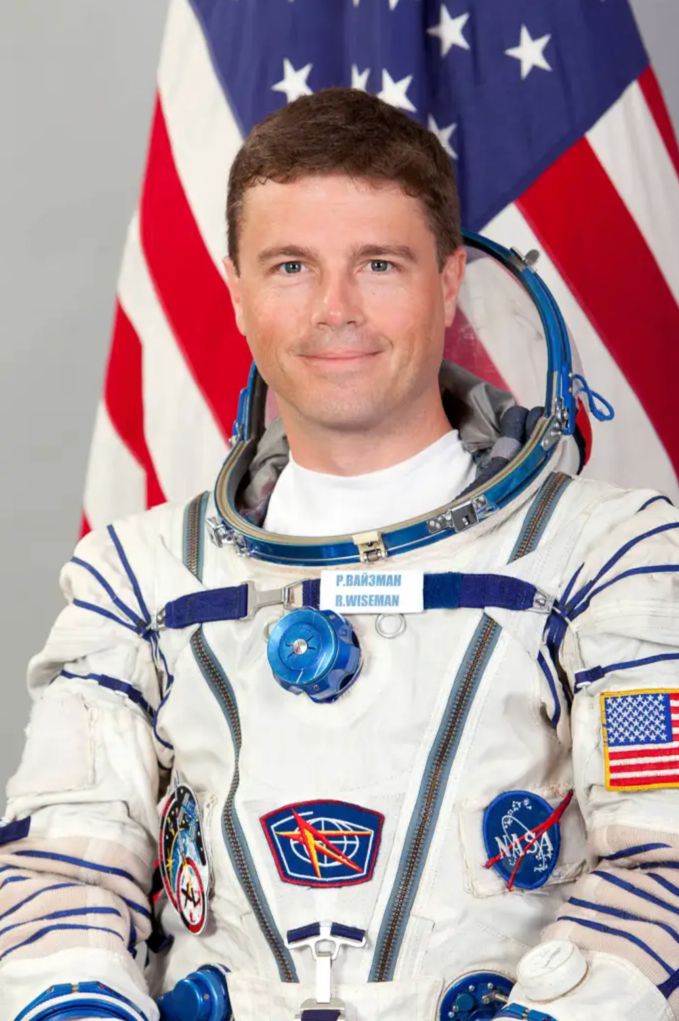
No human being had watched Earth disappear below the Moon’s horizon from a crewed spacecraft since the final Apollo mission in 1972. On flight day six of NASA’s Artemis II mission, commander Reid Wiseman pressed his iPhone against a docking hatch window and hit record — giving the rest of humanity a front-row seat to a phenomenon that, until now, existed only in archival film and the memories of twelve Apollo astronauts.
A View That Stopped a Crew in Its Tracks
The Orion spacecraft was approximately 4,600 miles beyond the Moon’s far side when the geometry aligned and Earth began its slow descent toward the lunar limb. Wiseman described the moment as “like watching sunset at the beach from the most foreign seat in the cosmos.” What the video captures is exactly that — a delicate blue crescent Earth, luminous against an absolute blackness that no terrestrial photograph can fully prepare you for, sinking steadily out of frame.
The footage is uncut and uncropped. Wiseman shot it at 8× zoom, a magnification he noted is roughly comparable to the natural field of view through the hatch window for the human eye. That detail matters: what you see in the video is close to what the crew actually saw, without cinematic enhancement or editorial shaping. The effect is quietly staggering.
💡 Key Fact: Artemis II is the first crewed spacecraft to reach cislunar deep space since Apollo 17 in December 1972 — meaning this Earthset footage represents the first time humans have filmed Earth setting below the Moon’s horizon in over five decades.
A Four-Person Crew, Four Different Perspectives
While Wiseman filmed on his phone, mission specialist Christina Koch was working methodically at an adjacent window with a Nikon camera mounted with a 400 mm telephoto lens, shooting in 3-shot exposure brackets — a technique that captures multiple exposures in rapid succession to preserve detail across the extreme contrast range between the sunlit Earth and the surrounding void. You can hear the Nikon’s mechanical shutter firing in bursts throughout Wiseman’s video, an accidental audio document of two astronauts recording the same historic moment with tools a decade apart in technology.
Pilot Victor Glover and Canadian mission specialist Jeremy Hansen watched from window three, their position confirmed by the crew’s own accounts and Orion’s interior camera footage released by NASA. Four people, one unrepeatable view. Wiseman noted he could just barely make out the Moon through the docking hatch window — the geometry of the spacecraft forcing him to use the smaller aperture rather than a dedicated observation port. The iPhone, compact enough to fit the frame, turned that constraint into an advantage.
Why the Shot Resonated Far Beyond Space Enthusiasts
The video accumulated nearly 200,000 likes within days of posting and drew mainstream coverage from Reuters, the BBC, and National Geographic. That reach isn’t surprising once you watch it. There’s something about the combination of raw authenticity — no color grading, no orchestral score, just the soft hum of spacecraft systems and the click of a camera — and the sheer improbability of the moment that bypasses the usual fatigue around space content.
NASA has long understood that personal, human-scale documentation of spaceflight does what press releases cannot. Scott Kelly’s year aboard the ISS, Samantha Cristoforetti’s long-exposure city-light photography — moments like these consistently produce spikes in public engagement and STEM interest that outlast the mission headlines. Wiseman’s Earthset video follows that tradition, but with added weight: this isn’t low-Earth orbit. This is deep space, a place no human crew had visited in a lifetime.
What Comes Next for Artemis
Artemis II is a crewed flyby, not a landing — its purpose is to prove out the Orion spacecraft and SLS rocket with humans aboard before NASA attempts to put boots on the lunar surface with Artemis III. But moments like the Earthset video have a way of reframing what “proving out” actually means. The engineering milestones matter enormously. So does this: the rekindling of a genuine, visceral public connection to the idea that people can go to the Moon again.
Koch’s bracketed Nikon images are still being processed through NASA’s full release pipeline, and the complete mission gallery — including high-resolution Earthset stills shot through the 400 mm lens — is available and growing at nasa.gov/artemis-ii. Whether those polished photographs will carry the same quiet punch as a shaky, zoomed-in iPhone clip filmed through a docking hatch is, perhaps, the more interesting question.