Jelly Roll Releases Powerful Music Video Filmed Inside San Quentin

on • Updated
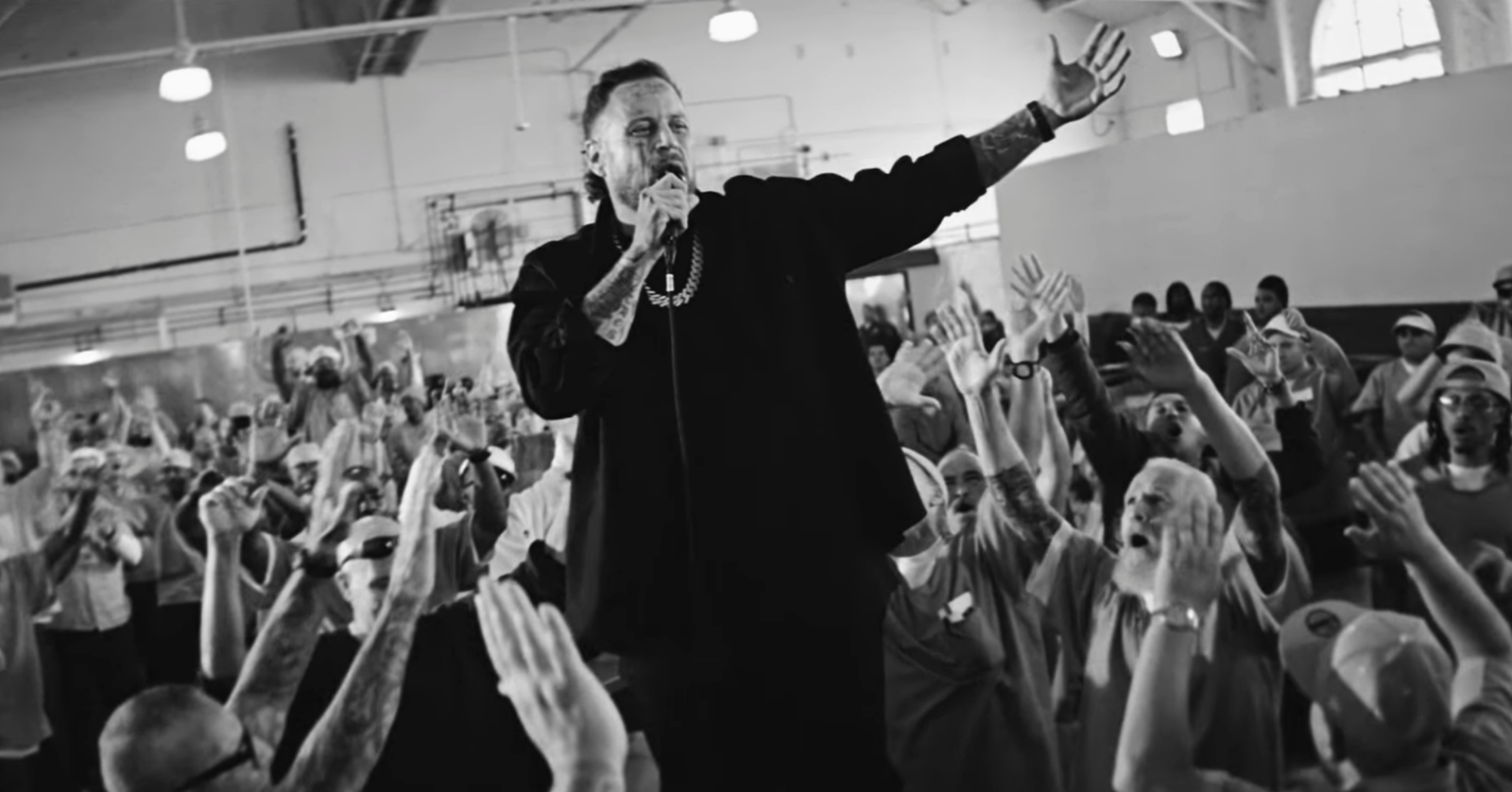
“These are not actors,” wrote Jelly Roll on his social media on Wednesday, July 15. “This is not a movie set.”
Attached to his post is a black and white video of him walking through the gates of the infamous San Quentin Rehabilitation Center in Marin County, California.
In voiceover, Jelly Roll can be heard praying over the inmates.
This moment is from the introduction to Jelly Roll’s new music video for “Hands Up,” and the video is all about freedom … and it comes at a time in his life where the notion of freedom has gained the attention of the public eye…
RELATED: Jelly Roll Reflects On His Roots In First Song Since Filing For Divorce From Bunnie Xo
Watch Jelly Roll’s “Hands Up” Music Video Shot In San Quentin
On Wednesday, July 15, country artist Jelly Roll released a powerful new music video for his latest single, “Hands Up.”
Notably, “Hands Up” — which is the first song Jelly Roll has released since he filed for divorce from Bunnie Xo — is a song about surrender… but it’s also about power through surrender.
Telling three stories, with all three being linked by the same chorus, “Hands Up” goes from the personal to the transcendent. Each time the chorus is sung, its words take on a new meaning based upon the story which was just told in the preceding verse.
The chorus goes:
“Everybody get your hands up / Everybody put your hands up / If you ain’t perfect but you try / Put ‘em way up to the sky / Touchin’ heaven kinda high / Ain’t that where we wanna go when we die / Just put your hands up / Everybody put your hands up.”
Within the context of the music video, Jelly Roll’s own past as a pardoned felon is highlighted.
It also calls to mind the likes of Johnny Cash, who performed for the inmates at San Quentin in 1959, among whom was Merle Haggard.
Of course, a dozen years later, in 1971, Merle Haggard and The Strangers performed at San Quentin as well.
Cash would go on to record a live album from inside San Quentin in 1969, too.
Sharing about San Quentin, Jelly Roll aims to provide some context for his music video and those who cannot speak for themselves who remain incarcerated.
Presented as a series of intertitles at the beginning of Jelly Roll’s music video for “Hands Up,” the path toward freedom for many of the inmates is highlighted.
“For many incarcerated men, the journey toward freedom begins long before the prison gates ever open,” the text reads.
It goes on to note that San Quentin, like many other prisons in the United States, now includes college classes, career training, and more to prepare its inmates for returning to civilian life.
Initially as voiceover, Jelly Roll can be heard praying, calling to mind the Lord’s Prayer as he says, “Dear Heavenly Father God, forgive us of our sins and help us to forgive those who have sinned against us.”
Jelly Roll proceeds to pray for a feeling of freedom to go over everyone as they continue to live within the walls of San Quentin, thanking God that he is a “God of second chances.”
From there, we then see the inmates he’s been praying over proceed to join him onstage in the cafeteria as his supporting band.
This music video, directed by Anthony Mandler, was initially exclusively released on July 15 on Spotify, as seen here.
The music video for Jelly Roll’s “Hands Up,” shot in San Quentin, was released on YouTube and elsewhere on July 17:

RELATED: Uncle Si Introduces Hundreds Of San Quentin Prison Inmates To Jesus Christ