Does Tennessee’s “Charlie Kirk Act” Really Encourage Free Speech?

on • Updated
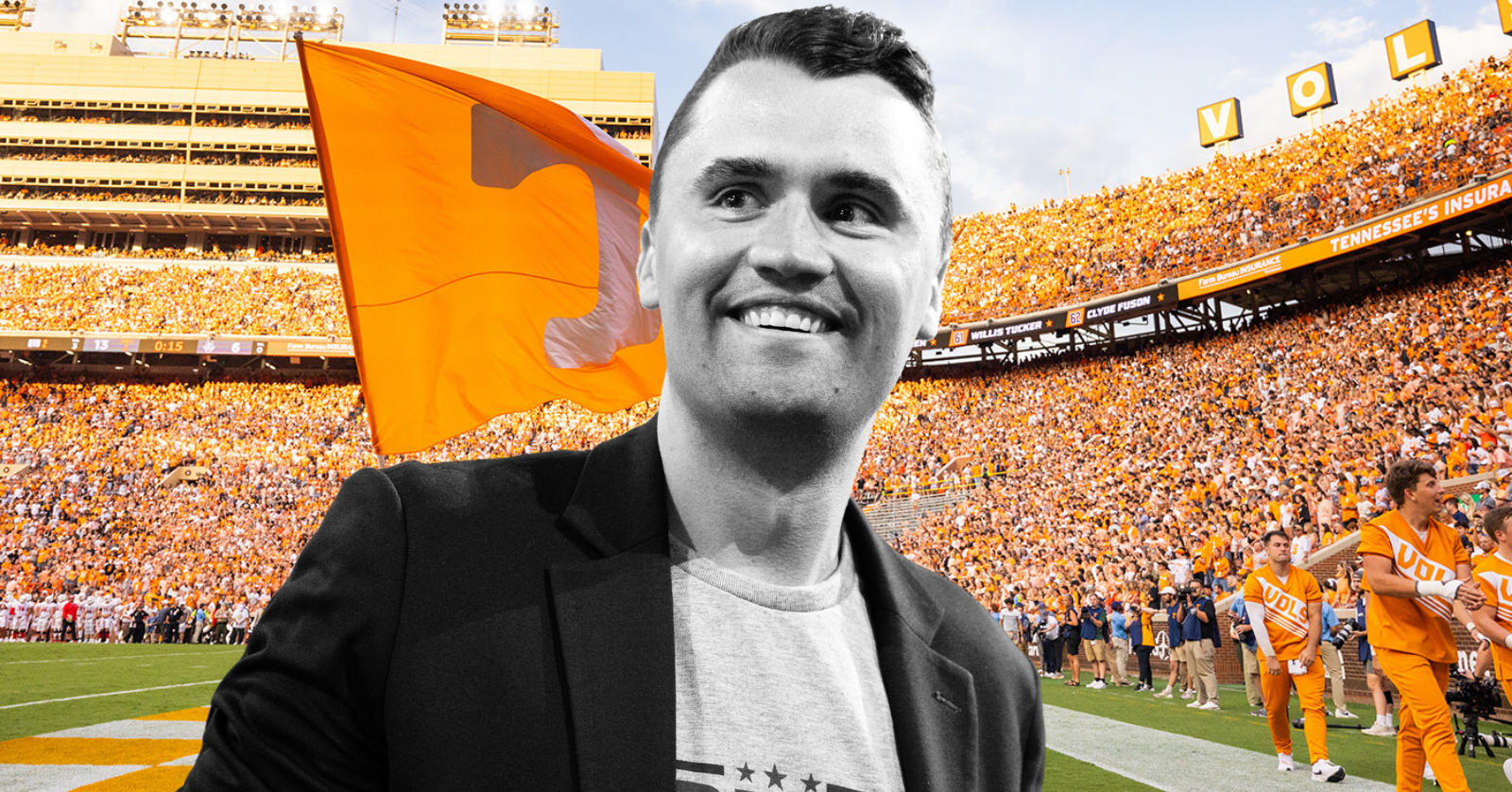
On September 10, 2025, the crack of a rifle rang through the communal outdoor space at Utah Valley University where Charlie Kirk, the 31-year-old conservative who founded Turning Point USA, was speaking to hundreds of students.
That bullet struck and killed Kirk, who died as he was engaging in open debate with students — something he championed.
Since then, the loss of Kirk has rippled through many conservative spheres of influence in America, with President Donald Trump even posthumously honoring Kirk with the Presidential Medal of Freedom, which is the highest civilian honor in the United States.
His legacy has also inspired legislation.
Tennessee’s legislative body, known as the General Assembly, has passed a bill that seeks to protect debate and deliberation on public college and university campuses.
Dubbed the Charlie Kirk Act, this bill was passed in a vote of 74-22 on April 13, and became law on Wednesday, July 1.
The law’s supporters argue it will promote freedom of speech, but opponents to the Charlie Kirk Act argue it stifles modes of expression that are protected by the First Amendment.
Learn more about the Charlie Kirk Act, including what it defends on campus, as well as what the punishments are for those who violate the new law, below…
RELATED: Tennessee Replaces “Pride” With “Nuclear Family Month”
What Will The ‘Charlie Kirk Act’ Do?
Amending Tennessee’s governing document, the Tennessee Code Annotated, the Charlie Kirk Act adds to Title 49, Chapter 7, which pertains to postsecondary and higher education.
The bill begins by requiring the governing bodies of all public institutions of higher education in Tennessee to “adopt a statement on freedom of expression that is identical or substantially similar to the University of Chicago’s Freedom of Expression Policy,” and making such a statement part of the institution’s bylaws.
The University of Chicago’s Freedom of Expression Policy states, “It is not the proper role of the University to attempt to shield individuals from ideas and opinions they find unwelcome, disagreeable, or even deeply offensive.”
The policy goes on to present a caveat, allowing for a college or university to uphold the law by restricting the expression of speech that “violates the law, that falsely defames a specific individual, that constitutes a genuine threat or harassment,
that unjustifiably invades substantial privacy or confidentiality interests, or that is
otherwise directly incompatible with the functioning of the University.”
With those exceptions aside, the policy promoted by the Charlie Kirk Act then states:
“In a word, the University’s fundamental commitment is to the principle that debate or deliberation may not be suppressed because the ideas put forth are thought by some or even by most members of the University community to be offensive, unwise, immoral, or wrong-headed. It is for the individual members of the University community, not for the University as an institution, to make those judgments for themselves, and to act on those judgments not by seeking to suppress speech, but by openly and vigorously contesting the ideas that they oppose.”
Continuing, the policy states that debate “is an essential part of the University’s educational mission,” adding, “The University has a solemn responsibility not only to promote a lively and fearless freedom of debate and deliberation, but also to protect that freedom when others attempt to restrict it.”
With that in mind, the policy notes that “members of the University community are free to criticize and contest the views expressed on campus, and to criticize and contest speakers who are invited to express their views on campus,” but the policy states “they may not obstruct or otherwise interfere with the freedom of others” to express such views.
The Charlie Kirk Act then looks to the “Kalven Report,” which was drafted in 1967 at the University of Chicago by legal scholar Harry Kalven Jr., and argues, “[A university] cannot insist that all of its members favor a given view of social policy; if it takes collective action, therefore, it does so at the price of censuring any minority who do not agree with the view adopted.”
The Charlie Kirk Act then goes on to present a few actionable rules for public colleges and universities, including:
- A university may not “refuse to invite a speaker because of the viewpoints expressed or espoused by the speaker or cancel an invitation of the speaker to speak at the institution in response” to the threat of protests or dismay from students and faculty;
- A university cannot “prohibit a student organization from inviting a speaker to campus” of its choosing;
- University’s may not “retaliate” against faculty for their views expressed in scholarly work or as protected by the First Amendment; and
- A university or faculty member may not discriminate against students who have “sincere religious beliefs” or are opposed to “abortion, homosexuality, or transgender behavior,” whether motivated by faith or otherwise.
The Charlie Kirk Act also outlines behaviors which will not be tolerated on campuses in regard to demonstrations at events with invited guest speakers, including:
- “Making noises with the intent of drowning out an invited speaker or hindering the audience from hearing the invited speaker;”
- “Standing in between an invited speaker and the audience with the intent of blocking or impeding an audience member’s view of the speaker or the speaker’s view of the audience members;”
- “Using signs or objects in a way to block or impede an audience member’s view of an invited speaker or the speaker’s view of the audience members;”
- “Staging walk-outs during an event or in the middle of an invited speaker’s remarks that result in considerable disruption or distraction or the need to pause the event for any period of time, however short;” and
- “Physically obstructing an invited speaker or an audience member from entering or attending an event.”
During President Donald Trump‘s first term in office, campus protests and demonstrations became fairly normal.
Such protests continued through the Biden administration, with protests on Ivy League Campuses, such as Columbia University, seeing students prevent access to class while expressing support for Hamas following its October 7 attack against Israel in 2023.
Many conservative speakers at campuses have begun the practice of allowing anyone who disagrees with them on a subject to ask questions first during Q&A segments.
Punishments For Students And Faculty Who Defy The Charlie Kirk Act
The Charlie Kirk Act also lists how the law should be enforced for those who defy it.
Here are the minimum punishments for students who do not adhere to the law, as outlined in the Charlie Kirk Act:
For a first-time violator, the student must be “placed on probation for the remainder of the student’s academic career at the institution;”
A student who is a second-time violator “must be suspended for not less than one academic year;” and
A student who violates the policy a third time “must be expelled without the chance of
re-enrollment.”
Similarly, if a faculty member defies the Charlie Kirk Act, here are the minimum punishments:
- For a first-time violation, the faculty member “must be suspended without pay for not less than one calendar week;”
- The second violation by a faculty member must lead to them being “suspended without pay for not less than one academic year;” and
- A third violation by a faculty member must lead to being “terminated without the
chance of being rehired.”
Failure for an institution to adhere to the Charlie Kirk Act could lead to a “writ of mandamus or injunction.”
Read the full Charlie Kirk Act, here.