David Allan Coe’s Son Reflects On His Father’s Complicated Life And Legacy

on • Updated
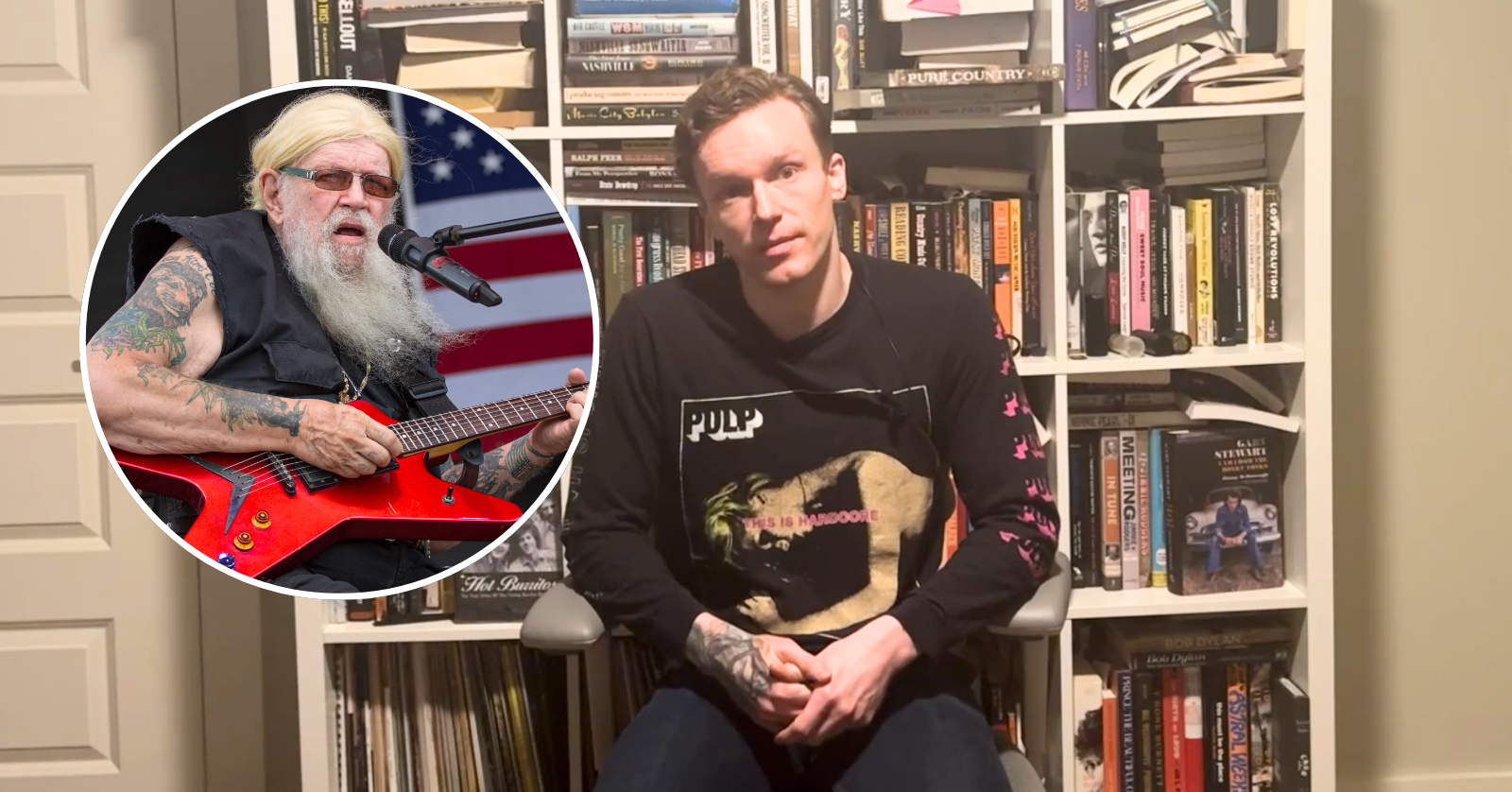
Tyler Mahan Coe Recorded A Video Statement On His Father’s Passing
Yesterday, April 29, the iconic outlaw country artist David Allan Coe died at the age of 86.
His professional legacy is marked by songs like the 1983 hit “The Ride”, which is written in the voice of the late Hank Williams; the 1984 hit song “Mona Lisa Lost Her Smile;” and, of course, his 1981 song “Tennessee Whiskey.”
Over the course of his storied career, Coe released 42 studio albums, four live albums, one collaborative studio album with members of the band Pantera, and much more.
For their obit, The New York Times recruited guitarist and record producer Bill Friskics-Warren to remember Coe, describing him as “the country singer whose outlandish exploits, prison tales and obscenity-laden performances earned him notoriety as perhaps the most transgressive exponent of the outlaw country movement of the 1970s and ’80s.”
As alluded to by the Times, Coe struggled with the law, and his relationships with fellow musicians, and even his family, sometimes presented challenges.
Now, on April 30, his son, Tyler Mahan Coe — who runs Cocaine & Rhinestones, which is a podcast that documents the history of country music — took a moment on his Patreon to record a video statement on the death of his father.
His comments offer a glimpse into life with a complicated artist as a father, like Coe.
RELATED: Breaking: David Allan Coe Dies At 86
David Allan Coe’s Son Remembers His Complicated Father
In a video statement shared to his Patreon page, David Allan Coe’s son, Tyler Mahan Coe, opened up about what the death of his father means to him.
Throughout his remarks, it is clear that separating the man from the artist is not entirely possible.
Tyler begins his video, admitting that he “had made a whole different regular [Patreon] post for this month,” but decided to change course when he learned his father had died.
While he didn’t go into great depth on their estrangement, that separation is often tangible in his words, even as he said, “I don’t think I really have a lot to say right now.”
Still, he started by opening up about who his dad was, on a big picture level, saying:
“David Allen Coe was always a difficult person to be close with, a difficult person to care about for several reasons. Nobody who ever knew him would disagree with that statement. But I did always care about him, even after it became clear that he and I were never going to speak to each other again. I never wanted anything bad to happen to him.”
Continuing, he said, “I do hate the choices he made for how to spend the final decade or so of his life, but I didn’t hate him, and those were his choices to make.”
He added, “Anyone who knows anything about that man knows how useless it would be to try to get him to make different choices. If that were possible, his career would have gone way differently and his legacy would probably be a lot better than whatever it’s going to end up being now — presumably some kind of eternally confused and confusing mess.”
As a music historian, Tyler then said:
“I guess that’s what makes me the most sad right now, because I know how much being misunderstood as an artist bothered him, and he’s just always going to be misunderstood by so many people. I mean, he was my father, and there are things about him I will never understand, so I can’t imagine what it’s like to make sense of his whole career, as a fan.”
From there, Tyler then describes his father as an “actually insane individual,” noting, “One of the things that makes it so difficult is there’s not one album or even one period of his career you can hold up as an example of who he really was as an artist, because no one album or period of his career is the entire picture.”
Further, he said this image of “the entire picture” was used by Coe to describe his own work, with Tyler adding, “He was trying to use songs to paint a picture for the audience, and, I think, the schizophrenic nature of his discography is partly a product of him trying not to leave out any part of the picture he saw — trying to paint the entire thing, even though the very nature of individual human existence meant he was the only one who could see it.”
Summing things up, Tyler simply offered, “At a certain point, the only explanation you can offer is one I have given many, many times in my life. That’s just D.A.C.”
With his voice quivering, he then stated, “OK, I think that’s all I’ve got for right now. Please go do something that you love.”
Notably, on the back of Coe’s 1986 album Son of the South, David Allan Coe wrote:
“Regardless of what you’ve heard about me, there are two things I am very proud of. One of them is my son Tyler who is my first born son. And the other is my personal relationship with God. I am proud of that relationship as I am proud that my son was conceived in Nashville, Tennessee and he is truly a son of the south.”
By 2013, Tyler, and all of Coe’s touring band, were booted from the tour by Coe. This unexpected decision contributed to their falling out.
Watch his full video statement on his Patreon, which can be accessed for free after logging in to Patreon, here.